Journal 2019
And above the firmament that was over their heads was the likeness of a throne, as the appearance of a sapphire stone: and upon the likeness of the throne was the likeness as the appearance of a man above upon it. And I saw as the colour of amber, as the appearance of fire round about within it, from the appearance of his loins even upward, and from the appearance of his loins even downward, I saw as it were the appearance of fire, and it had brightness round about. (Ezekiel 1:26-27 NIV, emphasis added)
I have never heard a preacher conclude from this passage that Jehovah God has a form similar to a man. I have been taught all my life that God is a spirit and therefore has no body, but I am not convinced of this. Scholars will claim that this description in Ezekiel is simply personification or anthropomorphism, that this was just a vision, or that Ezekiel wasn’t taken to the actual throne of God.
Scripture says that man is made in the likeness of God, in His image, but preachers skirt around that by saying we are like Him because we have mind, will, and emotion. But that’s the invisible soul. An image has substance. Humans are tripart beings: body, soul, and spirit. Our spirits don’t live separate and apart from our bodies any more than God does. He is a triunity whose form radiates pure light.
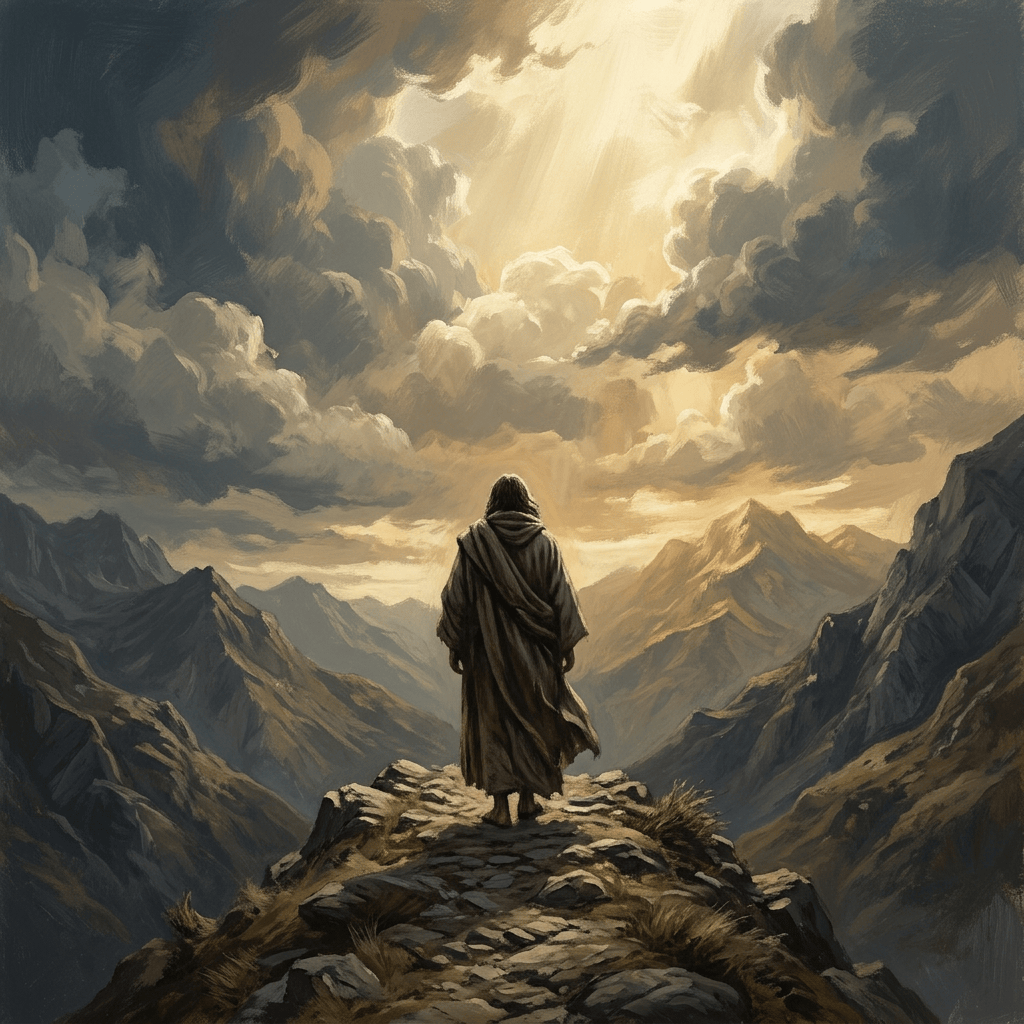
Exodus 24:9 tells us that Moses, Nadab and Abihu (Moses’ 2 sons), Aaron, and 70 elders went up Mount Sinai and “saw the God of Israel.” They saw God, and they ate, and they drank. You can’t see a spirit. So, what did they see? Apparently they didn’t see God’s face, but they did report that under His feet was something like a pavement made of sapphire. When Exodus 33:11 states, “So the Lord spoke to Moses face to face, as a man speaks to his friend,” was this just a figure of speech? I don’t think so. Obviously, God could not show Moses His glory inside the tent of meeting, but I’m guessing He appeared to Moses in a form that he could relate to.
Call me heretical, but this is how I read it. I think God has form and substance, but we cannot see Him with our human eyes. What will we see when we cross the great divide?
Side note: God foreknew that Nadab and Abihu would offer strange fire to Him, yet He invited them to the mountain. And perhaps even the 70 elders were involved with the golden calf along with Aaron after this mountaintop experience with God Almighty. How could they do this!?
An encounter with God does not negate our free will to reject Him.